
When investing in manufacturing sturdy gift boxes, the paper material directly determines durability, aesthetics, and the ability to print and reproduce the brand’s image.
In this guide, explores all sides of paper materials for rigid box packaging such as:
The most commonly used paper materials for premium rigid setup boxes
Explains the characteristics of each paper option
Recommends suitable materials for different industries
Shares practical tips to help businesses achieve the ideal balance between quality and production cost
This is a premium packaging solution made from a thick chipboard inner core (from 1,200 gsm or higher), wrapped with a printed outer paper that showcases brand graphics, colors, and finishing effects.
Unlike folding cartons, rigid boxes feature a multi-layer construction that delivers exceptional strength and structural stability. As a result, the packaging provide superior protection for products during transportation while enhancing their presentation at retail or during unboxing.
Structure, types, applications
Today, instead of choosing standard packaging, many brands invest in custom rigid gift boxes to create distinctive packaging that reflects their identity and fits their products perfectly.
Beyond customization, these packaging solutions offer several valuable advantages.
Superior product protection: A custom sturdy gift box will fit the product precisely, minimizing empty space, reducing movement during shipping, and enhancing protection for fragile and high-value items.
Enhance perceived product value: Businesses can customize materials, printing, and finishes to match their brand, creating luxury rigid boxes that enhance perceived product value before opening.
Strengthen brand recognition: Printing on rigid box packaging in accordance with the brand identity helps to create a consistent experience across all touchpoints, effectively increasing brand recognition.
A powerful marketing tool: Eye-catching rigid presentation boxes helps products stand out on store shelves, differentiates from competitors, and encourages customers to choose your brand.
Premium rigid box packaging consists of two essential components: a rigid paperboard core that provides structural strength and an outer wrapping paper that showcases printed graphics, colors, and finishing effects.
Thus, choosing the right combination of these materials allows businesses to produce sturdy gift boxes that not only protect products effectively but also enhance visual appeal.
The inner core is the structural foundation of all rigid setup boxes. Typically made from compressed layers of recycled paper fibers, chipboard features a dense, uniform structure and a smooth surface that delivers excellent rigidity and load-bearing performance.
Besides, suppliers will use greyboards with a thickness ranging from 1,200 gsm to 2,000 gsm, depending on the product’s weight and protection requirements.
1,200–1,400 gsm: Ideal for lightweight luxury products such as candles, cosmetics, jewelry, and skincare items.
1,400–1,600 gsm: Suitable for premium gifts, fashion accessories, and consumer electronics.
1,600–2,000 gsm: Recommended for heavier products, including wine bottles, spirits, and other high-value items that require maximum structural support.
Unlike the inner board, the outer paper directly determines the appearance of sturdy gift boxes. It displays the printed artwork, brand identity, and decorative finishes while influencing print quality and surface aesthetics.
Advantages:
Excellent offset printing performance with sharp image reproduction.
Produces vivid, accurate colors for complex graphics.
Compatible with matte lamination, gloss lamination, spot UV, and foil stamping.
Cost-effective and readily available for large-volume production.
Common applications:
Premium gift boxes
Luxury cosmetic packaging
Gourmet food luxury rigid packaging
Consumer electronics packaging
Corporate gift boxes
Advantages:
Creates a sophisticated, high-end appearance.
Excellent ink adhesion for consistent print quality.
Performs exceptionally well with foil stamping, embossing, and spot UV finishing.
Common applications:
Luxury gift boxes
Perfume packaging
Premium cosmetic packaging
Tea and gourmet food boxes
Advantages:
Lower material cost.
Suitable for high-volume printing.
Easy to print and convert.
Common applications:
Standard gift boxes
Confectionery packaging
Food packaging
Mass-market promotional packaging
Advantages:
Minimalist and environmentally friendly appearance.
Excellent durability and tear resistance.
Highly recyclable and sustainable.
Supports eco-conscious brand positioning.
Common applications:
Handmade gift boxes
Organic food packaging
Natural skincare packaging
Artisan product packaging
Advantages:
Outstanding image sharpness and color consistency.
Excellent compatibility with foil stamping and embossing.
Helps minimize warping after the wrapping process.
Common applications:
Jewelry boxes
Premium gift packaging
Watch boxes
Fashion accessory packaging
Luxury retail packaging
Advantages:
Instantly enhances the perceived value of packaging.
Pairs perfectly with foil stamping, embossing, and debossing.
Requires less printed ink while maintaining an elegant appearance.
Creates memorable tactile and visual experiences.
Common applications:
Premium sturdy gift boxes
Wine and spirits packaging
Luxury jewelry boxes
VIP gift boxes
Holiday and seasonal gift packaging
High-end luxury brand packaging
Every industry has unique packaging requirements in terms of product protection, visual presentation, and unboxing experience. Therefore, when printing rigid set up boxes, businesses should consider carefully.
Gift packaging is designed to create memorable first impressions and deliver an elevated customer experience. For this reason, premium custom rigid gift boxes typically feature a 1,400–1,800 gsm chipboard core wrapped with specialty paper or Ivory paper to achieve both durability and sophistication.
To further enhance the presentation of rigid presentation boxes, brands often incorporate premium finishing techniques such as:
Gold or silver foil stamping
Embossed logos
Spot UV coating
Matte lamination
Heavy duty gift boxes: Decorative cardboard & paper boxes
Fashion brands rely heavily on packaging to communicate quality and strengthen brand identity. As a result, rigid set up boxes for apparel, footwear, handbags commonly use a 1,200–1,600 gsm chipboard core paired with Couche, Bristol, or specialty paper.
For surface finishing, matte lamination is the preferred choice because it creates a refined appearance while minimizing fingerprints and surface glare.
Scented candles are lifestyle products that emphasize emotion, so the packaging should reflect these qualities from the very first glance.
Most sturdy gift box designs for candles use a 1,200–1,400 gsm chipboard core combined with Kraft paper, Ivory paper, or specialty paper.
Moreover, finishing effects typically delivers the best results, including:
Matte lamination
Subtle foil stamping
Embossed brand logos
Luxury candle packaging boxes: Gift and packaging solutions
Cosmetic packaging must provide reliable protection while building consumer confidence in product quality and brand image. Therefore, premium rigid box packaging for skincare, makeup, and beauty products generally features a 1,200–1,600 gsm chipboard core wrapped with either Couche or Ivory paper.
The choice depends on the design concept:
Couche paper is ideal for colorful packaging with detailed product photography.
Ivory paper offers a cleaner, more luxurious appearance with excellent printing consistency.
Luxury cosmetic box: Premium packaging solutions
Jewelry requires packaging that reflects its value while providing maximum protection for delicate items. Accordingly, manufacturers typically produce custom luxury rigid boxes using a 1,600–2,000 gsm chipboard core to create a solid, substantial feel.
For the outer wrap, specialty paper and Ivory paper remain the preferred choices thanks to their refined appearance and premium texture.
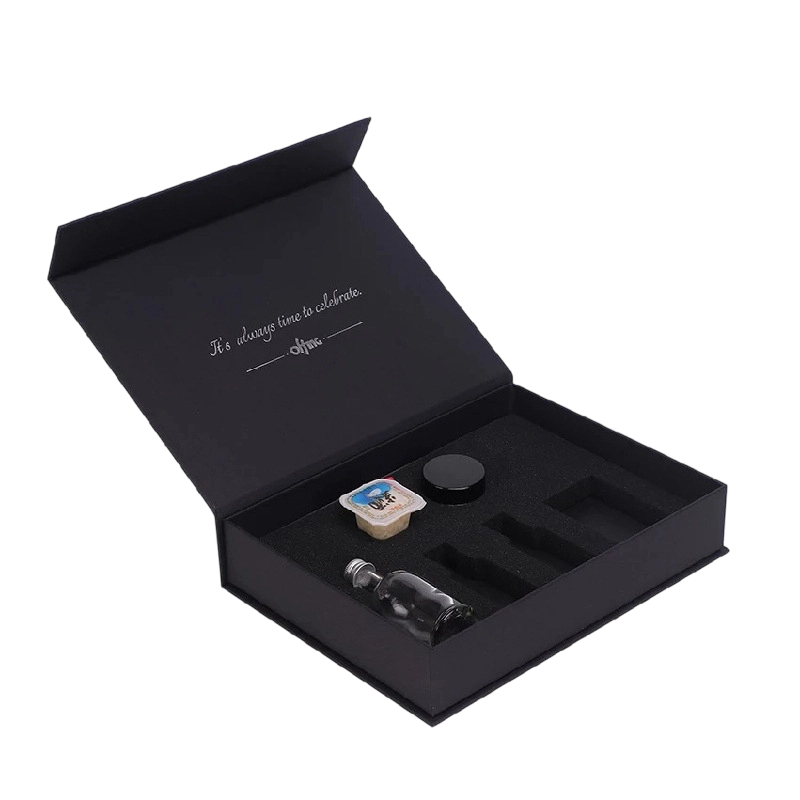
To further protect valuable jewelry and elevate the unboxing experience, many brands also include interior components such as EVA foam inserts, velvet trays and custom-fitted inserts.
Wine and spirits packaging must withstand significant weight while protecting fragile glass bottles during transportation and storage. Consequently, premium rigid setup boxes for wine typically utilize 1,800–2,000 gsm chipboard or thick greyboard to maximize structural strength.
For the outer wrap, manufacturers commonly select specialty paper, Bristol paper, or Ivory paper, all of which deliver excellent print quality and support premium finishing techniques.
Selecting the right paper material is one of the most important factors in producing premium sturdy gift boxes. Below are answers to the questions businesses most frequently ask when choosing materials for rigid box packaging.
Although both materials serve as structural cores, they differ significantly in construction and performance.
Chipboard (Greyboard) is made from multiple layers of paper pulp, offering good rigidity and strength, making it suitable for printing rigid boxes for wine, heavy products, and high-end gifts.
Corrugated paperboard consists of multiple layers of corrugated paper glued together, providing good strength and impact absorption. With a lower cost than chipboard, this material is suitable for printing rigid boxes for products of moderate weight.
Absolutely.
One of the biggest advantages of custom rigid gift boxes is their complete design flexibility. In fact, manufacturers can customize virtually every aspect of the packaging, including:
Box dimensions
Structural design
Opening mechanism
Interior inserts
Paper materials
Printing artwork
Surface finishing
Compared with standard off-the-shelf packaging, custom solutions provide a better product fit, reduce movement during shipping, improve protection, and create a more memorable unboxing experience.
If your packaging incorporates premium decorative finishes, selecting the right wrapping paper is essential.
Ivory paper is one of the most popular options because its smooth white surface produces crisp foil stamping and highly defined embossed details.
Couche paper offers excellent color reproduction while maintaining compatibility with premium finishing techniques.
The most expensive material is not always the best solution. Instead, businesses should evaluate paper materials based on product positioning, functional requirements, and production budget.
For large-volume production or standard retail packaging, combining a chipboard core with Couche or Duplex paper offers an excellent balance between durability, print quality, and affordability.
Premium brands, however, often achieve greater perceived value by choosing Ivory paper or specialty paper, especially when producing custom luxury rigid boxes for luxury products.
Working with an experienced packaging manufacturer early in the design process can help optimize material selection, structural engineering, and finishing techniques while controlling overall production costs.
We are the best supplier of printing products and can provide professional solutions for you. Please feel free to contact us for a quick quote now!
Ready To Get Started for Custom Printing?
No need to wait, just tell us what you need today to make your idea become real.
You can get a price of this model or send us any question to get any information you would like to know, we will reply to you soonest.